WHY IS SERVICE / PREVENTIVE MAINTENANCE SO NECESSARY FOR HEATING AND AIR CONDITIONING EQUIPMENT?
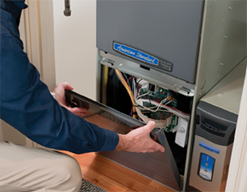
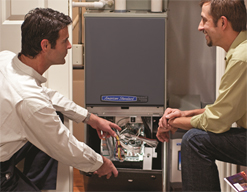
Preventive maintenance or service is essential to the proper functioning of air conditioning and heating equipment. If preventive maintenance is not preformed regularly or if it is done haphazardly, the equipment will require extensive and costly repairs at a later date. "It is a case of "pay me now or pay considerably more, later," and lose reliability while paying higher energy cost in the process.
Preventive maintance programs of air conditioning and heating equipment include regular inspections each year. During these inspections, proper operation of the equipment is checked and verified. All mechanical equipment is designed to operate within certain limits. air conditioning and heating equipment is no exception, and if not properly maintained, the equipment will exceed its design limitations with the result being equipment failure. Your best insurance against HVAC failure and cost containment is preventive maintenance.
-----------------------------------------------------------------------------------------------------------
PREVENTIVE MAINTENANCE CHECKLIST & HVAC PREVENTIVE MAINTENANCE
Why must we service & replace air conditioning filters? Air conditioning equipment is designed to operate with a specific quantity of air passing over its indoor coil surface. When air filters are not replaced, they clog and become coated with dirt. Similarly, the indoor coils get coated with dirt. This dirt reduces the amount of air through the unit below the design limit, leading to catastrophic failure.
In the cooling mode, if there is not enough air over the indoor coil, the coil tempature drops. When it drops below the freezing point, ice forms on the coil, which further reduces the airflow, which further reduces the coil tempature. The compressor within the unit is a pump, which is designed to pump a vapor. As the airflow through the indoor coils drops, there isn't enough heat being removed from the air passing over the coil to vaporize the liquid refrigerant inside the coil. Thus, instead of receiving a vapor, the compressor receives liquid refrigerant. this is called "Liquid Slugging". The effect of "liquid Slugging" is similar to the effect of pouring liquid into the cylinders of a gas engine. As liquids are not compressible, cylinder pressure exceeds the design limits, of the cylinder, and the valves, connecting rods, pistons, or other internal components are destroyed. The air conditioning unit starts out requiring that its filters be replaced. Now it needs a new compressor. Preventive maintenance or a new compressor? Ultimately, its your choice.
In the heating mode, low airflow causes the heat exchanger to overheat. Heat exchangers are designed to operate at temperatures between 102F and 200F. At higher temperatures, the heat exchangers oxidizes, its life-span is reduced, or it cracks and breaks. In either case, It makes far more sense to replace air filters regularly than to replace a heat exchanger costing far more.
-----------------------------------------------------------------------------------------------------------
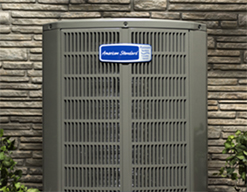
WHY MUST WE CLEAN CONDENSER COILS?
Air conditioning equipment is designed to operate between certain outdoor tempature limits. Cooling and condensing of the refrigerant vapor is designed to occur with a particular volume of air flowing through the condenser at a maximum outdoor ambient tempature. (Usually 115F) If the finned surfaces of the outdoor coils are fouled with dirt, the ability of these coils to transfer heat is reduced and the airflow through the condenser coil is reduced (blocked by dirt and dust) When the ability to transfer heat is reduced, the operating temperatures and pressures of the air conditioning unit increase. A unit, designed to operate at ambient temperatures of 115F or more, may stop operating at an outdoor tempature of 90F. Due to the reduced heat transfer capability, the operating temperatures and pressures within the unit exceed the manufactures safe limit and the unit shuts down. If the unit does not exceed the manufacturer's limits by enough to shut down, it will continue to run at reduced capacity and efficiency, and at an increased rate of wear and energy consumption due to the increased work load. A strong reason for preventive maintenance reducing wear, costs and catastrophic failure.
-----------------------------------------------------------------------------------------------------------
WHY INSPECT AIR CONDITIONING RELAYS AND CONTRACTORS?
Electrical relays are designed to open and close a certain number of times with a particular current load, before the contact points are damaged and relay requires replacement. If more than the design current is passed through this relay due to a motor working too hard, or low voltage conditions, the contact points overheat and become damaged. If the electrical contacts in a contractor (large relay) begin to get pitted, and the contractor is not replaced, eventually the air conditioners compressor motor or the fan motor controlled by the contractor will burn up and require replacement. Once again, if we exceed the design limitations of the device, or its anticipated life span, additional damage is caused. Cheap to replace a relay or contractor during a preventive maintenance when compared with a motor or compressor replacement.
-----------------------------------------------------------------------------------------------------------
WHY MUST WE LUBRICATE BEARINGS AND ROTATING COMPONENTS?
Bearings and other rotating parts are designed to have a useful life span of hundreds of thousands of hours, provided they are lubricated at appropriate intervals and are not overloaded due to vibration from defective drive belts or dirty blower wheels. If bearings are not lubricated regularly, they will overheat and eventually seize. When this occurs the bearings fall apart, and the blower wheel, shaft and housing are destroyed. This is a prime example of a situation where inexpensive preventive maintence was neglected with catastrophic results.
-----------------------------------------------------------------------------------------------------------
WHY MUST WE CHECK THE AIR CONDITIONERS REFRIGERANT CHARGE ON A REGULAR BASIS?
A unit operating with an insufficient refrigerant charge can ruin its compressor via two scenarios. The unit icing up due to a low-pressure condition causes the compressor to fail due to liquid slugging, as described before. The second type of failure is due to the fact that the compressor requires a certain quantity of cool refrigerant vapor to cool its motor windings. If the refrigerant charge is not sufficient, the motor within the compressor will overheat and burn up. A preventive maintenance program would spot this condition and save you money.
The scenarios described all causes damage to occur slowly over time, usually without being noticed until catastrophic failure has occurred. Regularly scheduled service / preventive maintenance on any HVAC or heating and air conditioning system lowers overall air conditioning and heating service costs. It reduces emergency calls due to catastrophic failures, it results in lower energy costs and lower replacement costs. It reduces repair costs.